


As farmers wrestle with increased weed resistance to herbicides, new management techniques offer modernized ways to combat weeds. Rapid improvements in drone technology have allowed farmers to attack hardy herbicide-resistant weeds from the sky.
SCOUTING SIDEKICK
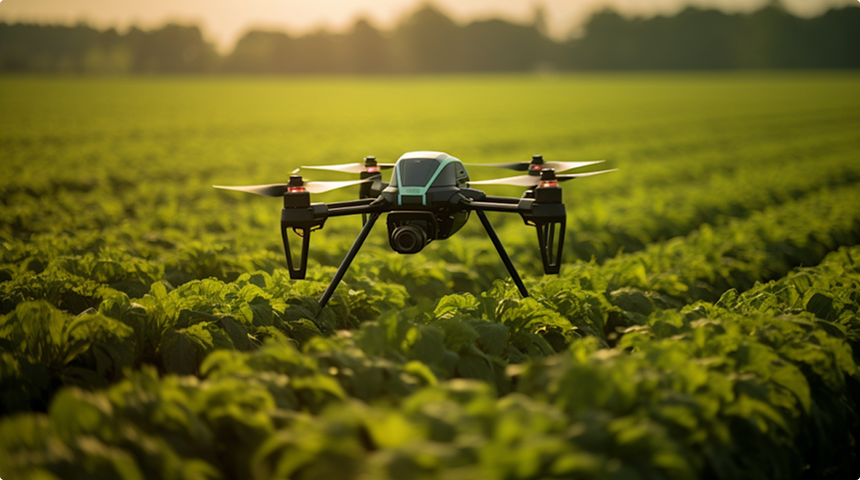
Scouting from above can help farmers better understand their fields by obtaining aerial views of the topography. This helps them identify weed patch locations and escapes, says Jared Roskamp, a BASF technical service representative.
″We’ve seen more growers trying to get better images and understanding of where weed spectrums are in their field as well as other pests,″ he adds.
Farms of all sizes and locations could benefit from the autonomous scouting opportunities drones may offer soon.
″Instead of being able to only physically check a few areas in the field at infrequent levels, with something like a drone it’s possible to check potentially larger areas more frequently,″ says Steve Bowe, group leader for biology R&D/technology integration and knowledge systems at BASF. ″As that becomes more autonomous, then you almost have real-time monitoring. That’s a little bit down the road, but probably not as far off as we think.″
SPRAY FROM THE SKIES
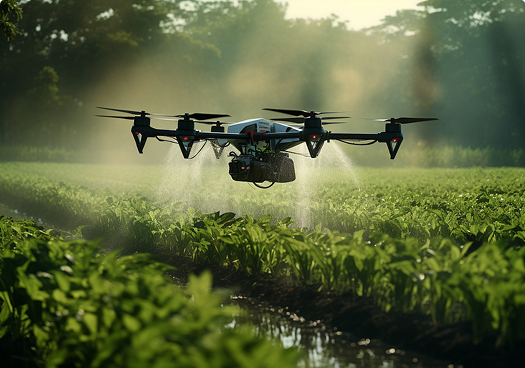
Drones can be a useful addition to weed management programs, but the technology isn’t perfect.
″Make sure you’re using them as a resource and not missing the timing with a ground rig or an aerial applicator,″ Roskamp says. ″Walking out and looking at weeds is still an option, so just make sure drones are integrated in your plan and you don’t whole-heartedly jump in too fast.″
Short battery life and weather concerns are other limitations.
″A typical drone, especially on the application side, can only fly for maybe 10 to 30 minutes before you have to come down and charge or change batteries,″ Bowe says. ″Similarly, how much payload or spray solution it can carry is limited, because it’s all related to weight and that power it takes to lift it and carry it.″
Like many things in agriculture, weather will dictate when drones can make applications.
″Wind is going to blow you out of spraying long before the drone would be unsafe to fly, so everyone is on an equal playing field there,″ Johnson says.
In some cases, drone applications could allow for more timely applications in the right conditions.
″Let’s say it rained last night, but it’s clear now and the dew has dried off,″ Johnson says. ″That’s a great time to spray, but you couldn’t go out and do that with a ground rig because you’d get stuck.″